The Importance of Wearing a Night Guard to Protect Your Teeth
Teeth are essential for chewing, speaking, and smiling. However, they can suffer from wear and tear due to habits like grinding and clenching, also known as bruxism. Fortunately, a night guard can help protect against the harmful effects of teeth grinding. General dentists often recommend these dental appliances for those with jaw pain, tooth sensitivity, or enamel damage.
The negative effects of bruxism
Bruxism is a condition that affects many individuals, often occurring during sleep without them knowing. It involves the excessive grinding or clenching of teeth, which exerts abnormal pressure on the jaw and teeth. Over time, this constant pressure can lead to oral and overall health issues, such as:
- Broken, chipped, or flattened teeth
- Worn tooth enamel, exposing deeper layers of the affected teeth
- Increased tooth pain or sensitivity
- Tired or tight jaw muscles, or a locked jaw that will not open or close completely
- Jaw, neck, or face pain or soreness
- Pain that feels like an earache
- Dull headache that starts in the temples
- Decreased sleep quality for the patient and their sleeping partner
The causes of bruxism vary widely, including stress, anxiety, misaligned bites, and sleep disorders. When left untreated, bruxism can contribute to chronic discomfort, headaches, and temporomandibular joint (TMJ) disorders.
How a night guard helps address bruxism
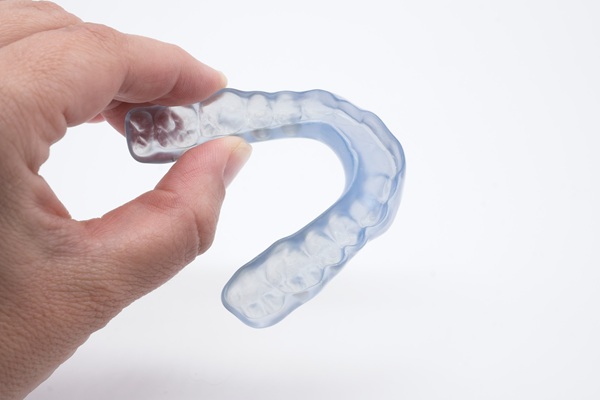
A night guard provides a protective barrier between the patient's upper and lower teeth. It consists of durable materials like acrylic or thermoplastic, which effectively absorb and distribute force generated by grinding or clenching. As a result, night guards minimize the wear and tear of bruxism on the patient's teeth, preserving their enamel and reducing the risk of chips and fractures.
In addition to protecting teeth, wearing a night guard can alleviate symptoms associated with bruxism. They can help reduce jaw pain, fewer headaches, and improve the patient's sleep quality after consistently using a properly fitted night guard.
Benefits of wearing a night guard
Wearing a night guard helps preserve dental health by preventing prolonged teeth grinding that can lead to flattened, cracked, or chipped teeth. This cost-effective preventive measure can reduce the need for expensive restorative procedures like dental crowns or veneers. Night guards also help patients with temporomandibular joint disorders (TMJ), alleviating strain on their jaw joints and muscles, which can cause pain and limited movement. Additionally, they protect existing dental restorations from damage, ensuring the long-term health and effectiveness of both natural teeth and dental work.
Types of night guards
There are two types of night guards available: custom-fit and store-bought. A general dentist can recommend the most suitable option based on individual needs.
Custom-fitted night guards
These night guards are made specifically for a patient's teeth. General dentists take impressions of the patient's dental anatomy. Because custom night guards are designed to fit the patient's teeth, they are typically more comfortable than store-bought mouth guards. They also provide effective protection against bruxism. While custom night guards are more expensive upfront than store-bought ones, they last longer and offer more long-term benefits.
Store-bought night guards
There are two main types of store-bought mouthguards.
- Stock night guards. The patient will wear this type of night guard right out of the box. They are not customizable but are a convenient over-the-counter option for people with mild bruxism.
- Boil-and-bite. The patient can soften the material by boiling it in water, then placing it in their mouth and biting it down to mold it to the shape of their teeth. This method provides a more personalized fit than a generic stock night guard.
Store-bought guards are cheaper than custom-fitted night guards. However, they are less effective for protection against teeth grinding and clenching and may not be the long-term solution that patients are looking for.
Caring for a night guard
Proper night guard care can help extend its lifespan and maintain oral hygiene. After each use, the patient should rinse their night guard thoroughly with water and gently clean it with a toothbrush and mild soap. After cleaning and drying it, the patient should store their night guard in a ventilated case to prevent bacterial growth and damage. Regular checkups with a general dentist can also help ensure that the night guard remains in good condition and continues to fit as designed.
Call our office to learn more
Wearing a night guard is a simple yet effective way to protect your teeth from the harmful effects of bruxism and other dental issues. It is an investment that helps ensure a healthy and pain-free smile for years to come. Do you believe you would benefit from a night guard? Call our office to learn more or to schedule a consultation.
Request an appointment here: https://drdavidbrumbaugh.com or call R. David Brumbaugh, DDS at (214) 306-4402 for an appointment in our Dallas office.
Check out what others are saying about our dental services on Yelp: Night Guards in Dallas, TX.
Related Posts
The dentist often does a dental checkup and cleaning to look for cavities or other teeth issues. That way, the patient can have a professional cleaning and exam every six months. Many times, patients do need to come in more often than that. That is true if the patient is at risk for an oral…
Getting a regular dental checkup is critical for good oral health. But what if there is an issue at the appointment? The good news is the dentist has the right training and tools to fix nearly any problem. Keep reading to learn more.Getting dental checkups regularly allows patients to get the teeth cleaned well. That…
More than likely, you have had a dental checkup multiple times in your lifetime. So, you know a hygienist cleans the teeth and a dentist performs an oral examination. You also understand that either a hygienist or a technician takes X-rays during the visit. However, have you ever wondered just how important the X-rays are?…
The next time you go in for a dental checkup, talk to your dentist specifically about brushing. As a child, your parents probably taught you to brush your teeth after every meal. However, they might not have shared much information as to why. After talking to your dentist, you will gain some invaluable insight. By…